CAPE TOWN, South Africa — The Cape Town International Convention Centre (CTICC) has just witnessed history as Mining Indaba 2026 concluded its four-day run with the largest attendance in the event's 32-year history. From February 8-11, over 10,500 mining executives, investors, government officials, and industry stakeholders converged on South Africa's legislative capital to discuss the future of African mining under the theme "Stronger Together: Progress Through Partnerships."


The record-breaking attendance signals renewed global interest in Africa's mineral wealth at a time when the continent's role in supplying critical minerals for the global energy transition has never been more significant. From lithium deposits in the Democratic Republic of Congo to uranium reserves in Namibia, African nations are positioning themselves as essential players in the worldwide shift toward renewable energy and electric vehicles.
A Summit of High-Level Engagement
This year's Mining Indaba featured an impressive roster of speakers, including South African Transport Minister Barbara Creecy and Environment Minister Willie Aucamp, who addressed delegates on the government's commitment to creating an enabling environment for sustainable mining investment.
The South African government used the platform to outline its vision for beneficiation—the process of adding value to raw minerals before export—as a key strategy for economic development. Officials emphasized that the country would no longer be content to simply export raw materials while import-finished products.

Zambian President- Hichilema speaking on strategic partnership
"South Africa has the minerals, the infrastructure, and the skilled workforce to become a hub for mineral processing and manufacturing," Minister Creecy told delegates during a plenary session. "Our goal is to ensure that the benefits of our natural resources are felt by all South Africans."
The sentiment was echoed throughout the conference, with numerous African nations presenting their own strategies for capturing more value from their mineral resources.
Critical Minerals Take Center Stage
A dominant theme throughout Mining Indaba 2026 was the growing importance of critical minerals in the global economy. With the electric vehicle revolution accelerating and renewable energy installations expanding worldwide, demand for minerals such as lithium, cobalt, manganese, and rare earth elements has surged dramatically.
African nations are particularly well-positioned to benefit from this trend. The Democratic Republic of Congo alone holds approximately 70 percent of the world's cobalt reserves, while newly discovered lithium deposits across the continent have attracted billions in investment commitments.

During the summit, several major announcements highlighted the scale of investment flowing into African mining:
Representatives from major lithium projects in the DRC outlined expansion plans that could see the country become one of the world's top lithium producers within the next five years. These developments come amid growing concerns about supply chain concentration, with Western nations eager to diversify their sources of critical minerals away from China.
Namibian officials, meanwhile, used Mining Indaba to promote the country's uranium sector, which has seen renewed interest as nuclear energy gains recognition as a clean energy source essential for meeting global climate targets.
   Ferrochrome and Manganese:

South Africa's Value-Add Push South Africa's ferrochrome and manganese sectors featured prominently in discussions about beneficiation. The country is the world's largest producer of ferrochrome—a key ingredient in stainless steel—and holds approximately 80 percent of global manganese reserves.
Government officials announced upcoming deadlines for mining companies to submit plans for local processing facilities, signaling a more assertive approach to ensuring domestic value addition.
Industry representatives expressed cautious optimism about the policy direction while raising concerns about infrastructure constraints, particularly in the energy sector. Load shedding—South Africa's term for rolling blackouts—remains a significant challenge for energy-intensive mining operations, though recent improvements in electricity supply have provided some relief.
The discussions around manganese refining proved particularly animated, with companies presenting various proposals for processing facilities that could create thousands of jobs while capturing more value from South Africa's abundant reserves.

 Sustainability and ESG:

No Longer Optional Environmental, Social, and Governance (ESG) considerations dominated many sessions at Mining Indaba 2026, reflecting the growing importance of sustainability in mining investment decisions.
International investors made clear that access to capital increasingly depends on demonstrating robust environmental credentials, meaningful community engagement, and transparent governance structures.
Several companies used the summit to announce new sustainability initiatives, including carbon reduction targets, renewable energy projects at mine sites, and community development programs.
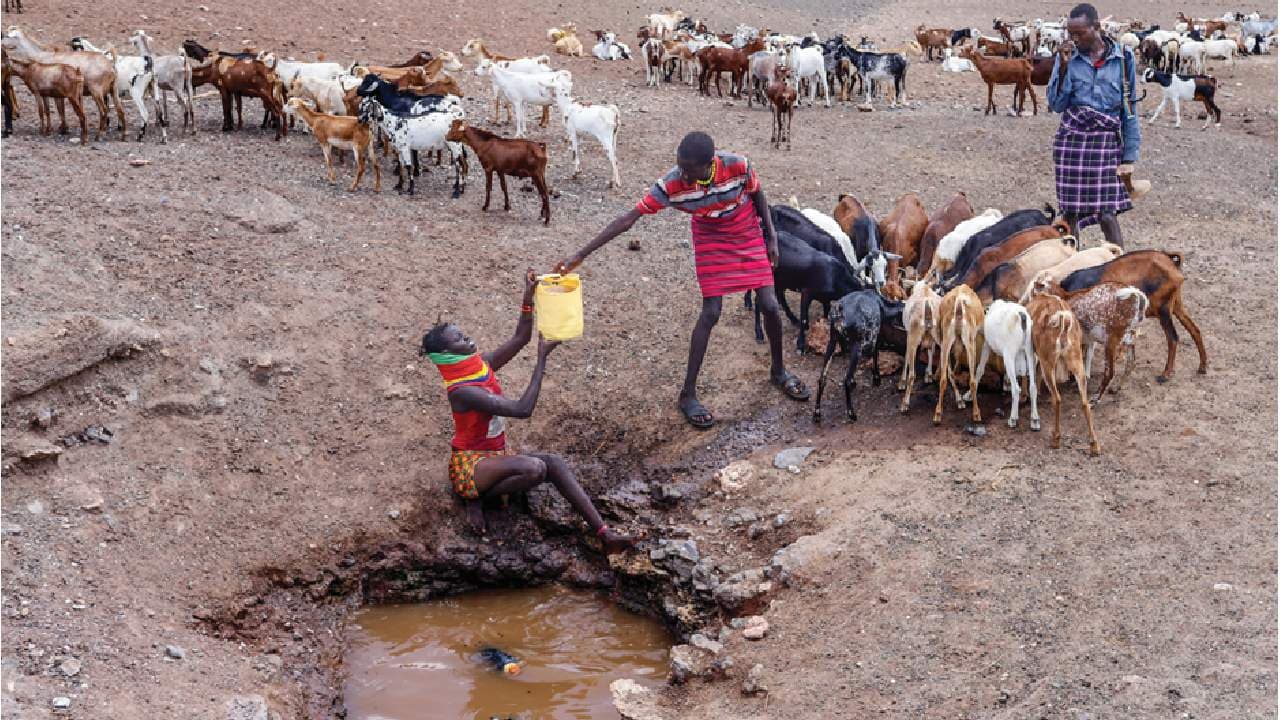
Water management emerged as a particularly pressing concern, with presentations highlighting innovative technologies for reducing water consumption and treating mine-affected water. In a continent where water scarcity affects millions, mining companies face growing scrutiny over their water usage.
Community relations also featured prominently, with discussions about benefit-sharing arrangements, local employment, and the importance of maintaining social license to operate. Case studies from across the continent illustrated both successful community partnerships and cautionary tales of projects derailed by local opposition.
Looking Ahead: Mining Indaba 2027
As delegates departed Cape Town, organizers were already looking ahead to Mining Indaba 2027, scheduled for February 8-11 next year. The rapid registration for next year's event suggests that interest in African mining will only continue to grow.
The 2026 edition will be remembered for its record attendance, but more importantly, for the substantive discussions about how Africa can leverage its mineral wealth for sustainable development. The theme of partnership—between governments and industry, between African nations and international investors, between mining companies and communities—provided a framework for navigating the complex challenges ahead.
For Africa, the stakes could not be higher. The continent's mineral resources represent an unprecedented opportunity for economic transformation, but realizing that potential will require coordinated action, significant investment, and a commitment to ensuring that the benefits are shared broadly.
As one delegate observed on the closing day: "Mining has been Africa's story for centuries, often not to Africa's benefit. This time, we have a chance to write a different ending."
Mining Indaba 2026 may well be remembered as a turning point in that story.
---